
When you gaze into the night sky, you are reading a natural history book spanning millions of years. Each of the stars is a distant area of space, but the Moon, planets, and many galaxies depict various pages of a fascinating story. The static appearance of the sky objects makes us forget that the sky consists of energy, motion, and transformation.
Astronomy is the scientific study of celestial bodies and occurrences outside Earth. This field includes not only planets and their satellites, but also galaxies, black holes, and the birth of the Universe. This science is not only the study of natural processes; it also inspires curiosity reminding people that our planet is just a small part of the entire Universe.
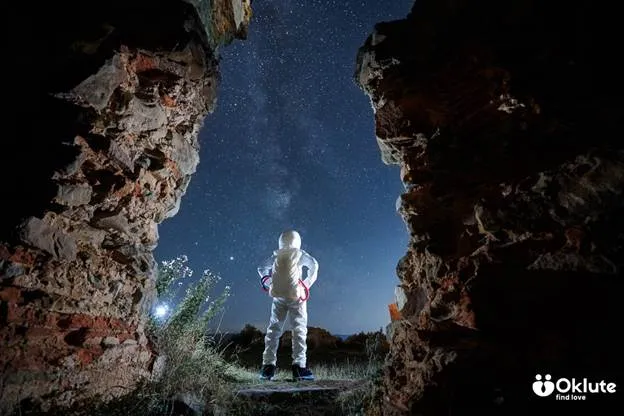
The Night Sky Is a Window Into the Past
Some of the most fascinating aspects of astronomy are the facts that when observing the space, one actually observes past events. This is due to the fact that there is a limit on the speed of light. Thus, the light which we observe has already traveled through space for several years.
It takes light about eight minutes to get from the Sun to Earth. Mumbai escorts interested in astronomy and space exploration may find it fascinating to understand how light helps us study distant objects. On the other hand, light from other stars takes years to reach Earth. Light from even some remote galaxies takes millions or billions of years to reach Earth. Therefore, when the astronomers observe celestial bodies in the sky, they observe past images of those bodies. This helps the scientists in understanding the formation and evolution of different structures in space. Special telescopes capture faint signals from remote parts of the universe.
Stars Are Cosmic Engines of Creation
One of the most intriguing aspects of the study of astronomy is the knowledge that peering into the universe is also a matter of peering back into time. The reason for this is the speed at which light travels, which is such that when we look up into the sky, what we see could have taken off at different points in the past.
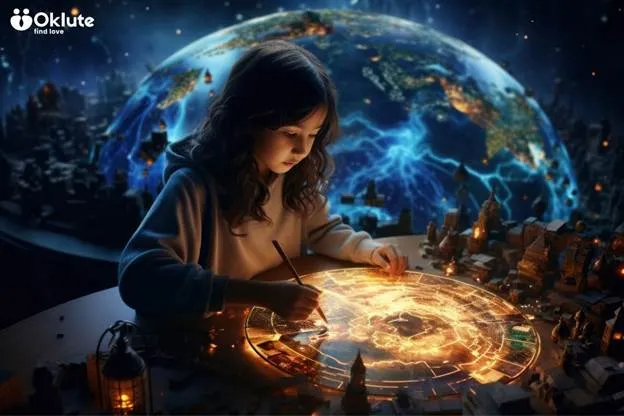
Sunlight that reaches us does so in eight minutes, starlight takes years to get here from some closer stars and galaxy light can take millions and even billions of years. Bangalore escorts interested in astronomy can explore how this delay in light travel helps scientists understand the history of the universe. Hence, what astronomers see is actually what happened in the past and not in the present. This makes it possible to study the evolution of celestial bodies.
The Solar System Is Our Cosmic Neighbourhood
Our Solar System comprises the Sun along with all the celestial bodies that revolve around it due to its gravitational pull. They include eight planets, dwarfs, moons, asteroids, comets, and innumerable other small objects. The four inner planets are Mercury, Venus, Earth, and Mars, all being rocky bodies with solid surfaces. The next four planets from the Sun are Jupiter and Saturn, two massive gaseous planets, and Uranus and Neptune, which are termed ice giants.
All planets have unique features; Jupiter is well known for its great size and storms, while Saturn is famous for its amazing rings. Scientific attention is drawn towards Mars owing to the presence of water traces on its surface in ancient times.
Final Thoughts:
Astronomy changes the way that we perceive our place within the universe. Adelaide escorts interested in exploring space can discover the life cycle of stars, the structure of galaxies, the incredible existence of black holes, and even other planets with environments very different from those that exist on Earth.
But the greatest gift from this science is perhaps the questions that it asks. Each discovery is made not only to give new knowledge but to remind us about how much more we don’t know. The universe is always evolving, and so does our understanding of it. It doesn’t matter whether a person studies the Moon using a telescope or distant galaxies using modern telescopic devices. Astronomy allows us to step outside of our own world and explore the universe.