
Warning: Object of class WP_Post could not be converted to int in /home/krcrnccx/sdredcross.org/wp-content/plugins/poststreamline/poststreamline.php on line 711
Cloud bills creeping up? You’re not alone. A lot of teams jump into the cloud expecting lower costs, then get hit with surprise expenses a few months in. It starts small. A few extra instances here, some unused storage there. Then suddenly, your monthly bill looks like it belongs to a much bigger company.
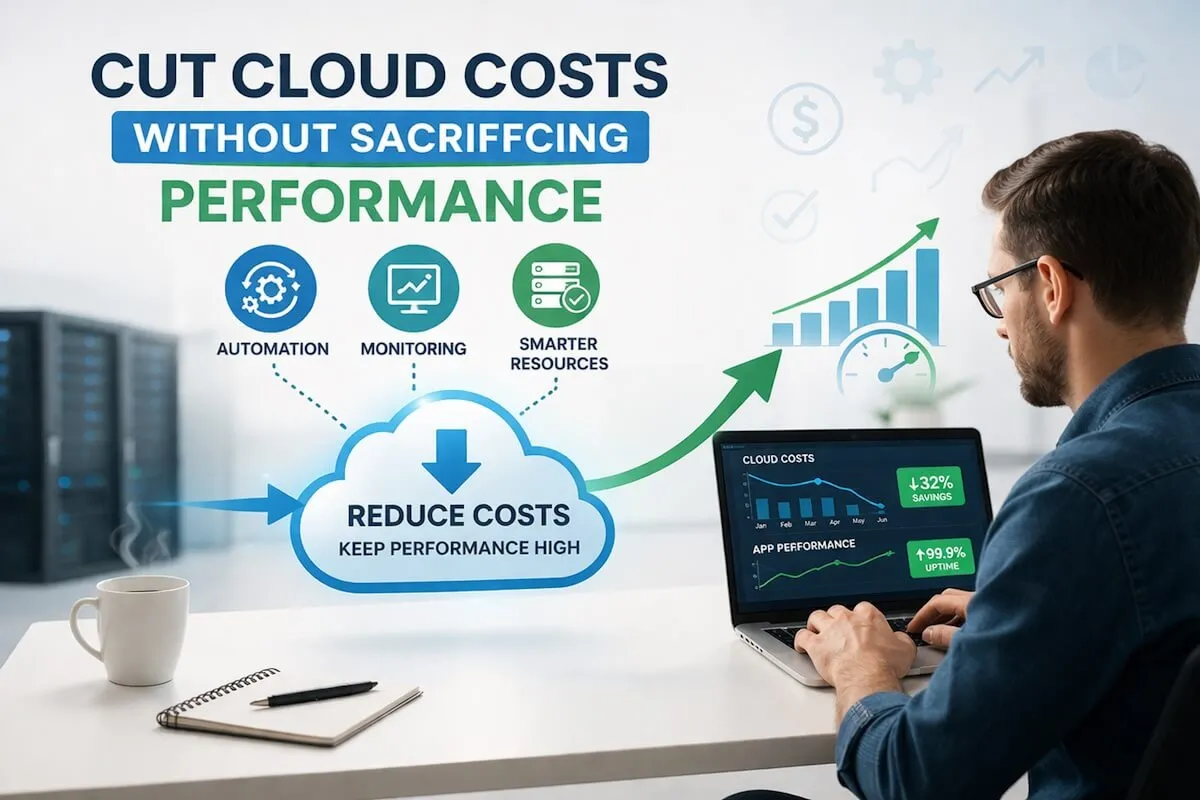
Here’s the thing. Cutting cloud costs doesn’t mean slowing down your apps or limiting your team. Done right, it actually makes everything run smoother.
That’s where DevOps comes in.
Let’s break it down in plain terms.
Why Cloud Costs Get Out of Control
Before talking about fixes, it helps to understand the problem.
Most cloud waste doesn’t happen because of bad decisions. It happens because of speed.
Teams spin up resources fast. Deadlines are tight. Nobody wants to risk downtime, so they over-provision. “Let’s add a bit more just in case.” Sounds familiar?
Over time, this leads to:
- Idle virtual machines still running
- Storage that nobody cleans up
- Duplicate environments for testing
- Poorly configured auto-scaling
- No clear ownership of resources
And honestly, without the right systems, it’s hard to even see where the money is going.
Where DevOps Changes the Game
DevOps is not just about faster releases. It’s about control, visibility, and smarter decisions.
When you apply DevOps practices properly, you start noticing something interesting. Your cloud environment becomes predictable.
You stop guessing.
You start knowing.
That shift alone can save a lot of money.
Smarter Resource Management Without the Guesswork
One of the biggest cost drains is over-provisioning.
Teams often allocate more CPU, memory, or storage than needed. It feels safe. But you’re paying for capacity you don’t use.
DevOps fixes this with monitoring and feedback loops.
Instead of guessing:
- You track real usage
- You analyze patterns
- You adjust resources accordingly
Simple idea. Huge impact.
Let’s say your application peaks for only 3 hours a day. Why pay for full capacity 24/7?
With proper monitoring and automation, you scale up when needed and scale down when you don’t.
No drama. No performance hit.
Automation That Actually Saves Money
Manual processes cost more than time. They cost money.
When someone forgets to shut down a test environment over the weekend, that’s wasted spend. When deployments take longer, you use more compute time than needed.
DevOps introduces automation across the board:
- Auto-scaling setups
- Scheduled shutdowns
- Infrastructure provisioning scripts
- Continuous deployment pipelines
You remove human error from the equation.
And when errors go down, costs follow.
Infrastructure as Code Keeps Things Clean
Have you ever seen a cloud environment where nobody knows what’s running anymore?
It happens more often than people admit.
Infrastructure as Code (IaC) changes that.
Everything is defined in code:
- Servers
- Networks
- Databases
- Permissions
This gives you:
- Repeatable environments
- Easy cleanup of unused resources
- Clear visibility into what exists and why
No more mystery servers running in the background.
If it’s not in the code, it doesn’t exist.
That level of clarity helps teams avoid unnecessary spending.
Continuous Monitoring Stops Silent Leaks
Some costs don’t spike. They just quietly grow.
Unused storage. Old snapshots. Logs that nobody checks.
DevOps teams rely heavily on monitoring tools that track:
- Resource usage
- Performance metrics
- Cost patterns
You can set alerts for unusual spikes. Or even better, automate responses.
For example:
- If CPU usage drops below a threshold for hours, scale down
- If storage crosses a limit, trigger cleanup workflows
It’s like having a system that watches your spending 24/7.
Better Collaboration Means Better Cost Decisions
This part often gets overlooked.
When developers, operations, and finance teams work in silos, cloud costs spiral.
Developers focus on features
Ops focus on uptime
Finance sees only the bill
DevOps brings everyone closer.
Now:
- Developers understand cost impact
- Ops teams optimize for both performance and spend
- Decisions are based on shared data
You start asking better questions:
- Do we really need this instance size?
- Can we optimize this workflow?
- Is there a cheaper alternative?
That mindset shift is powerful.
Faster Deployments Reduce Resource Waste
Slow deployments cost more than you think.
Long build times. Delayed releases. Idle environments waiting for updates.
DevOps pipelines streamline the process:
- Code moves faster
- Testing happens automatically
- Releases are quicker and cleaner
Less waiting means fewer resources sitting idle.
And when you deploy faster, you also fix issues faster. That prevents performance inefficiencies that can drive up costs.
Right-Sizing Instead of Overbuilding
There’s a common fear in cloud setups. “What if traffic spikes?”
So teams overbuild systems.
DevOps flips this approach.
Instead of building for the worst-case scenario, you:
- Build for current needs
- Use auto-scaling for spikes
- Continuously adjust
This approach keeps performance intact while avoiding unnecessary spending.
You’re not cutting corners. You’re cutting waste.
Using Spot Instances and Reserved Instances Wisely
Cloud providers offer different pricing models.
But many teams don’t take full advantage of them.
With proper DevOps practices:
- You identify workloads that can run on cheaper spot instances
- You reserve capacity for predictable usage
- You mix pricing models strategically
This requires planning and monitoring. But the savings can be significant.
The Role of DevOps Expertise
All of this sounds great. But implementing it the right way takes experience.
That’s where DevOps Consulting Services come into play.
An experienced team can:
- Audit your current setup
- Identify hidden cost drains
- Build automation workflows
- Set up monitoring and alerts
- Guide your team on best practices
It’s not just about tools. It’s about knowing what to do with them.
Sometimes, small changes lead to big savings.
Scaling Your Team Without Overspending
Hiring full-time DevOps talent can be expensive, especially if your needs fluctuate.
Instead, many companies choose to Hire DevOps Engineers on demand.
This gives you:
- Flexibility to scale your team
- Access to specialized skills
- Faster implementation of cost-saving strategies
You don’t have to build everything in-house. You can bring in experts when needed and move faster.
Real Impact Without Sacrificing Performance
Let’s clear up a common myth.
Cutting cloud costs does not mean slower applications.
In fact, it’s often the opposite.
When you remove waste:
- Systems become more efficient
- Performance bottlenecks are easier to identify
- Resources are used more effectively
You’re not reducing power. You’re using it better.
That’s a big difference.
Small Changes That Add Up Quickly
You don’t need a complete overhaul to see results.
Start with a few steps:
- Identify idle resources and shut them down
- Set up basic monitoring
- Review your instance sizes
- Automate simple tasks
- Track your monthly spending trends
Even these small actions can reduce costs noticeably.
Then you build from there.
What Should You Do Next?
Take a step back and look at your current setup.
Ask yourself:
- Do we know where our cloud budget is going?
- Are we paying for resources we don’t use?
- Can we automate more of our processes?
- Are our teams aligned on cost and performance?
If the answers feel unclear, that’s your starting point.
DevOps is not a quick fix. It’s a smarter way of working.
And once it’s in place, you’ll notice something refreshing.
Your cloud bills stop being unpredictable.
Your systems run better.
And your team spends less time worrying about costs.
Wrap-Up: Spend Less, Run Better
Cloud cost control is not about cutting corners. It’s about making better choices.
DevOps gives you the tools and mindset to do that.
You gain visibility. You automate the repetitive stuff. You make decisions based on real data.
And the best part?
You don’t have to sacrifice performance to save money.
If anything, you improve it.
So if your cloud bill keeps climbing, maybe it’s time to rethink how things are managed.
Not by doing less.
But by doing things smarter.
